When I first introduce Punnett squares in my genetics workshops, I see the same expression on nearly every face: mild panic. Squares? Math? But within fifteen minutes, that panic transforms into something closer to delight. Punnett squares are genuinely satisfying once you understand them.
Let me show you what took me years to learn to teach simply. If you have not yet covered the basics of dominant and recessive alleles, start with my Color Genetics 101 guide first.
What Is a Punnett Square, Really?
A Punnett square is nothing more than an organized way to see all possible genetic combinations from a breeding. That is it. No complex math. Just a grid showing what could happen.
Imagine you have two dogs and you want to know what colors their puppies might be. Each parent will pass one copy of each gene to their offspring. The Punnett square shows you all the possible combinations of what they might pass on.
Building Your First Punnett Square
Let us say you are breeding two dogs who are both heterozygous at the B locus. Each one is Bb: black in appearance, carrying one copy of the chocolate gene.
Here is how to build the square:
- Draw a 2x2 grid (four boxes total)
- Put dad's possible contributions across the top
- Put mom's possible contributions down the left side
- Fill in each box by combining the row and column
Now count the results:
- 1 box: BB (homozygous black) - 25%
- 2 boxes: Bb (heterozygous black, carrying chocolate) - 50%
- 1 box: bb (homozygous chocolate) - 25%
Phenotype prediction: 75% black puppies, 25% chocolate puppies. Three out of four will look black, one out of four will be chocolate. But only one of those blacks will be true-breeding (BB). The other two are carriers just like mom and dad.
The Question That Changed Everything
A student once asked: "But I bred two carriers last year and got seven black puppies and no chocolates. Was I just unlucky?" This is when I explain probability versus guarantee. Each puppy is an independent event, like flipping a coin. Getting seven heads in a row is unlikely but possible. With enough puppies across enough litters, the ratios will approach 75/25. But any single litter is a small sample with high variance.
When One Parent Is Homozygous
Let us try a different scenario. You are breeding a chocolate dog (bb) to a black dog that you suspect carries chocolate (Bb).
Results: 50% Bb (black carrying chocolate), 50% bb (chocolate).
Notice something powerful here: if you get even one chocolate puppy from this breeding, you have confirmed that the black parent was Bb, not BB. Test breedings like this were how breeders confirmed genotypes before DNA testing existed. Today, DNA color panels make this determination much simpler.
Handling Multiple Loci
Real color genetics involves multiple genes. What if you want to predict results for two loci at once, say B (black/chocolate) and D (full color/dilute)?
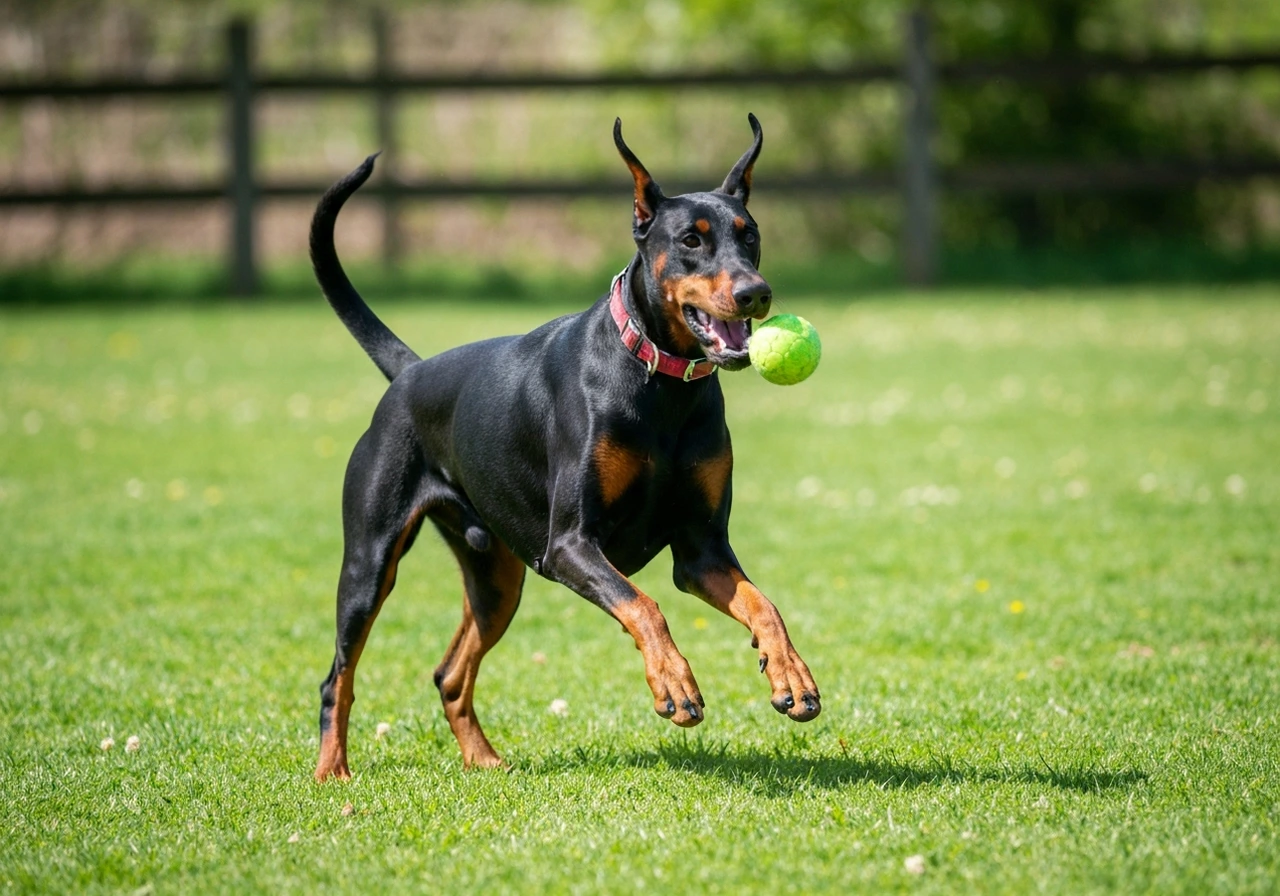
You need a larger grid. Let us breed two dogs who are both BbDd: black, carrying both chocolate and dilute.
Each parent can produce four types of gametes: BD, Bd, bD, bd. Understanding how these loci interact requires familiarity with the ABCDE loci system.
The square becomes 4x4, giving you 16 possible combinations. I will not draw the full grid here, but the results follow a pattern:
- 9 out of 16: At least one B AND at least one D = Black
- 3 out of 16: At least one B AND dd = Blue (diluted black)
- 3 out of 16: bb AND at least one D = Chocolate
- 1 out of 16: bb AND dd = Lilac/Isabella (diluted chocolate)
This is the famous 9:3:3:1 ratio that Mendel discovered with pea plants. It applies to any two independent loci.
The K Locus Complication
Some loci have more than two common alleles, which makes Punnett squares more complex. The K locus in dogs has three: KB (dominant black), kbr (brindle), and ky (allows A locus expression).
When working with three alleles, your squares get bigger and the dominance hierarchy matters more. This is where many breeders start using DNA testing instead of trying to work through all possibilities by hand.
Online Calculators I Recommend
Once you understand the principle, there is no shame in using digital tools for complex calculations. I regularly recommend these to my students:
- UC Davis Veterinary Genetics Laboratory calculator - Scientific, accurate, includes rare alleles
- Dog Coat Color Genetics calculator - User-friendly for basic calculations
- Embark's breeding tools - If you have Embark test results, their tools use your actual data
These tools do exactly what we have been doing by hand, just faster and with fewer arithmetic errors.
When Calculators Get It Wrong
A word of caution: online calculators are only as good as the information you put in. If you tell a calculator that your dog is BB when it is actually Bb, you will get wrong predictions. This is why I always recommend DNA testing before making important breeding decisions. Guess and the calculator will confidently give you wrong answers.
Practical Exercises to Try
The best way to learn Punnett squares is to practice them. Here are some exercises I give my students:
Exercise 1: Two black dogs, both Bb. What percentage of puppies will be chocolate?
Exercise 2: A blue dog (B_dd) bred to a black dog (B_D_). If the black dog is Dd, what colors are possible? What if it is DD?
Exercise 3: You bred two black dogs and got a lilac puppy. What must both parents' genotypes be at both B and D loci?
The answers to Exercise 3 illustrate a point from my article on hidden genetics: both parents must have been BbDd. They both needed to carry chocolate AND dilute for that lilac puppy to appear.
From Prediction to Planning
Once you can predict outcomes, you can start planning breedings strategically. Want to produce blue puppies? You need at least one parent to be blue (dd) or both to carry dilute (Dd). The Punnett square tells you the odds.
Want to avoid producing dogs with potential color-linked health issues? The square shows you which combinations to avoid.
This is where genetics moves from academic interest to practical breeding tool.
Common Mistakes to Avoid
From years of grading student exercises, here are the errors I see most often:
Confusing genotype with phenotype. Your square shows genotypes. You then have to translate those into what the dogs will actually look like.
Forgetting gene interactions. A dog that is ee will be red/yellow regardless of what is happening at the B or D loci. The E locus overrides them.
Treating percentages as guarantees. A 25% chance means 25%, not "one out of every four puppies." Litters are small samples with high variance.
Not knowing parental genotypes. If you do not know what the parents actually carry, your predictions are just educated guesses. This is why DNA testing is so valuable.
Your Assignment
Before you move on, I want you to draw out one Punnett square by hand. Pick any locus and any parental genotypes. The physical act of writing it out helps the concept stick in a way that just reading about it does not.
Keep that piece of paper. In six months, look at it again. You will be amazed at how intuitive this has become.
Next, read about hidden genetics to understand why colors sometimes surprise you even when you have done your predictions correctly.
Related Resource
Understanding how to predict outcomes is valuable for both coat color and health genetics. For herding breed specific health predictions including MDR1 and other traits, visit The Herding Gene.